Tuesday, July 23, 2013

Porgy and Bess: The Movie (sort of)

I recently read Oscar Levant's A Smattering of Ignorance, a collection of his anecdotes and opinions of musical life in New York and Hollywood in the 20s and 30s. It was a quick and fascinating read. One of the essays is entitled My Life: The Life and Times of George Gershwin.

Oscar Levant

Levant's reminiscences reacquainted me with the extraordinary life of George Gershwin, who began as a Tin Pan Alley songwriter and lived to become an acclaimed composer of concert music. He died, tragically, at the age of 39, in 1937, from a brain tumour.

George Gershwin


Everyone at all familiar with the repertoire for piano and orchestra will have heard the Rhapsody in Blue. There is also a Second Rhapsody, a Piano Concerto, and Variations on I Got Rhythm.

His orchestral works include An American in Paris and the Cuban Overture. There are also Three Preludes for solo piano.

Like so much really good music, any of these pieces is worth revisiting.

Gershwin studied composition only after his initial Broadway success (according to Levant most of the successful Broadway and Hollywood composers did). This led him to compose his most ambitious work, the opera Porgy and Bess, which was first performed in 1935.

It's full of truly fabulous music, not all of which is as well known as Summertime, It Ain't Necessarily So and Bess You is My Woman Now. Gershwin had the gift of vocal melody, whether writing for pre-existing lyrics or tunes to which words would be fitted later by his lyricist brother, Ira. In Porgy and Bess he composed a fully worked out orchestral score, the details of which are not evident in a piano reduction. Lush orchestration, counterpoint melodies and complex rhythms abound.

It was made into a movie in 1959 directed by Otto Preminger. Most, but not all, of the principal player's voices are dubbed. Sidney Poitier, for example, plays Porgy but the singing voice is that of Robert McFerrin (father of Bobby McFerrin), the first African-American man to sing at the Metropolitan Opera.

I found the following recording on YouTube. The poster has substituted the stereo cast recording for the mono soundtrack of his copy of the film. Only the fifteen songs from the LP are here, but it gives some idea of what the movie (and opera, if you're lucky enough to see it live) is like. It's a little disturbing that the actors are so obviously not singing but that fault is hardly unique to this film.

I'm afraid you may have to follow the link to YouTube as I was unable to properly embed it in the blog.

According to comments that follow on YouTube, the film is currently unavailable. Disney, who owns it, won't spend the money to restore the negative. How sad is that?


Monday, April 22, 2013

HPO Fiesta Concert in the Great Hall of Hamilton Place

I was still buzzing the morning after hearing the Hamilton Philharmonic Orchestra, under Maestro Jamie Sommerville in the Great Hall of Hamilton Place last night, Saturday, April 20.

It's been along time since we attended a full orchestra HPO concert. I'm not interested in Pops concerts or concerts that include 19th Century warhorses. But I'm not a typical concert goer. One can't fault the HPO or Sommerville for programming as they do. They have to appeal to the widest possible audience in order to put bums in the seats.

This concert was all 20th and 21st Century music by New World Composers. The older pieces are acknowledged masterpieces, a couple with which I am very familiar. The new pieces included a World Première and two modern orchestral showpieces.

They opened with Bernstein's Overture to Candide. The orchestration has undergone many editions but this must have been the 1982 "opera house" version for this 60 piece orchestra. Each time I hear it I am reminded of what an accomplished composer and brilliant orchestrator Bernstein was.

Leonard Bernstein

The performance was virtuosic. The woodwind playing throughout the concert was spectacular. In this piece, principal flute Leslie Newman deserves special mention. The Great Hall has wonderful acoustics for live unamplified music. There's a huge wooden curtain that is dropped behind the orchestra, in front of the stage, so the audience is in the same room as the players, as it should be. It's a shame Opera Hamilton can't afford to use this theatre because the acoustics for opera are excellent as well.

Great Hall of Hamilton Place


Sommerville requested a minute's silence in memory of the victims of the Boston Marathon explosions (he's also principal horn of the Boston Symphony)  before beginning the next piece on the program. I closed my eyes and allowed myself to experience the moment, surrounded by 1500 very quiet people. He'd commenced conducting the almost inaudible opening measures of the suite from the ballet Appalachian Spring without my knowing it. The effect was magical. It's a long time since I've heard this piece and I'd forgotten, frankly,  how much more there is to it than Simple Gifts. Thank you, Aaron Copland.
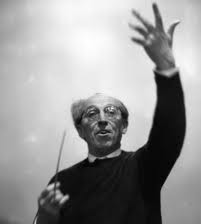
Aaron Copland


Michael Torke's Javelin came next. It was commissioned for an album of music celebrating the Atlanta Olympic Games. The composer weaves elements of jazz and popular music into a complex texture. The simultaneities (i.e the harmonies) of the piece at any given point are no more challenging to the listener than those in any piece of later tonal orchestral music (eg. Richard Strauss), but the music is not organized like earlier music. Themes are launched and followed by music which doesn't develop as one expects. I'd listened to a recording of this piece recently and really enjoyed it, but it was nothing to compared to this performance by this really good live orchestra.

Michael Torke

The second half opened with the familiar music of the Gershwin Rhapsody in Blue. Clarinettist Stephen Pierre played the jazzy opening glissando nicely and followed it with a lot more exaggerated articulations. I'd never heard done quite this way, so I checked out the Whiteman 1930 recording and this is the way that clarinet solo was played then, with Gershwin at the piano. Brilliant.

Canadian Pianist Lucille Chung played the piano solo. She's a very fine player, with a fabulous bio. I found her demeanour overly dramatic and animated. It certainly didn't make her play any less well.

The Rhapsody in Blue is a pretty hard act to follow and HPO Composer in Residence Abigail Richardson-Schulte got the call. She first spoke at length about her three movement piece, City Syntesthesia explaining the program of this piece which was inspired by images. I liked the piece a lot, as I did Downstream, her chamber orchestra piece that had been premièred a week before. The demands (and rewards) of writing for full orchestra are different than those of a chamber piece and I did enjoy the lush sound of 40 excellent string players. The piece fit well in this concert.

This composition (and the aforementioned Downstream) are programmatic works which draw on extra-musical sources (eg. stories or pictures). I question the wisdom of discussing the "program" in such detail as Ms. Richardson did before the concert, as well as in the printed notes and in a least two interviews of which I am aware. Speaking as a composer, I would hope the audience would be listening to the music for its own sake, rather than trying to identify the particular cues which the composer has used to structure the piece.

They wrapped up the concert with a spirited performance of Fiesta by Peruvian composer Jimmy López. The work was described in the program as "four pop dances" and there was certainly lots of appropriate rhythm and percussion but this was not just a latter day Symphonic Dances from West Side Story. This piece, like Javelin, belongs within the mainstream of contemporary orchestral writing and employed the technique and sound of New Music.

Jimmy López

What a great concert! I'll be watching for the HPO to announce their 2013-2014 season. If there are more imaginative programs like this one, I'll be there.

For those of you with some time, here areYouTube performances of Javelin and Fiesta.


Wednesday, April 17, 2013

Strata Vocal Ensemble

I went to hear the Strata Vocal Ensemble at MacNeill Baptist Church in Westdale on Sunday, April 14 in the afternoon. They performed, under their conductor Gordon Adnams, a varied program of almost entirely unaccompanied choral pieces. It was an entertaining and musically satisfying afternoon in part because I experienced again, this time from the audience, music which I'd sung as chorister.

My university choral professor, Deral Johnson, would have approved of the choice of music. In the absence of a major work, he taught us to represent different style periods and languages in unified groups within a concert. The music for this concert surely fulfilled those criteria.


They opened with a three songs selection (out of forty possible ones) from the Canticum Canticorum (Song of Songs) of Giovanni Pierluigi da Palestrina.

A little Palestrina goes a long way. While he is the best known of the composers of this period, Palestrina's music is not usually regarded as the most interesting. Modern audiences are more likely to be engaged by music of Tomás Luis de Victoria or Orlando di Lasso. I once sat through a concert performance Palestrina's entire Missa Papae Marcelli and it was tedious, one movement hardly distinguishable the others. If this is a fault, it was that of the music, not the performers.

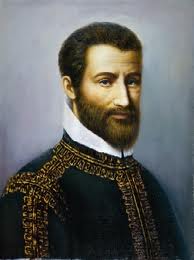
Palestrina

In any event, this set was the least successful in the concert. Individual voices were evident. The tenor parts seemed to soar often into the "tight underwear" range. The choir did not achieve the ethereal otherworldliness that the best performances of this music display. It was, however, their warm-up piece and the concert got steadily better.

The Four French Madrigals which followed were much more effective due, in part, to their more homophonic texture. They set offered plenty of contrast and included di Lasso's famous Bonjour, Mon Coeur.

They completed the first half with J.S. Bach's motet Lobet Den Herrn, alle Heiden, the most demanding work on the program. The choir was accompanied by Kirk Starkey, cello and Kate Ward playing a portatif organ. I know the piece well, having performed it as a Tudor Singer under Wayne Riddell. It's one of the standard works in this repertoire, one which every serious chorister aught to have the opportunity to sing. The choir fared well with the support of the accompanying instruments.

After the break, the choir sang four Stanford Latin motets finishing with the rightly popular Beati Quorum Via. The choir seemed at home with these pieces and gave a convincing reading.

They followed with Vancouver composer Stephen Chatman's Elizabethan Summer, lovely madrigal-like settings of three 17th C. texts. Again, the choir sang convincingly.

Stephen Chatman

Next came three chorus from Leonard Bernstein's incidental music to Jean Anouilh's play The Lark. It was wonderful to hear this music, so different from the other works, reminding me of singing this music a long time ago under the aforementioned conductor Deral Johnson.

The choir finished the concert with spirited performances of three spirituals, Goin' Home to God, Deep River and Ride the Chariot. They sang a second arrangement of Deep River as their encore.

I'd encourage choral music devotées to watch for the next outing of this choir. They sing well, the repertoire is interesting and varied, and McNeill is an intimate setting with a satisfying acoustic for choral and chamber music.


Sunday, April 14, 2013

What New Festival at the HPO

I went Saturday, April 13 to hear a chamber orchestra concert at the Studio Theatre of Hamilton Place, conducted by Jamie Sommerville and featuring the very fine first-desk players of the Hamilton Philharmonic Orchestra.

Maestro Jamie Sommerville

Last night's concert was sparsely attended reminding us of why last year's festival was cancelled outright. The audience was loud and appreciative and made up largely, I suspect, of the folks whose financial support sustains the orchestra.

The concert opened with Norbert Palej's Divertimento, which was the most beautiful music of the evening. His idiom is highly accessible and melodic. He combines long note value melodies with impressionistic underpinnings and sometimes regular, and at others times pointillistic, accompanying rhythms, all incorporated in a detailed texture. His affinity to vocal music clearly contributes to his musical style. The strings were featured and violist Elspeth Thomson made a fine effect when it came her turn to play the main theme.

Norbert Palej

They followed with brefs messages (2011) by the celebrated Hungarian composer György Kurtág. His music is of the lineage of Musical Expressionism (like the pre-dodecaphonic Schoenberg) and the concentrated style of Webern. He was also a close friend of György Ligeti. These were the most "difficult" works on the concert but, since they were short and concise, easily digested.

They closed the first half with Jordan Noble's Entropy. He's a prolific Canadian composer with numerous prizes to his name.  I would like to have heard the piece again (they played the première of Abigail Richardson-Shulte's Downstream twice). The piece begins very busily and energetically and the tempo slows, and the density of the texture decreases, as the piece winds down to a very quiet, almost static ending. The piece isn't very long and it was hard for this listener to determine how the musical material was organized on only one hearing.

Jordan Noble

The second half opened with the aforementioned première of Abigail Richardson-Shulte's Downstream. Her idiom is very eclectic and programatic. The motion of the piece was, appropriately, undulating and suggested dance rhythms at times. The middle slow section was very spare and included woodwind players disassembling their instruments in order to produce the sound of bird calls. She's a very imaginative composer.

Abigail Richardson-Shulte

The concert closed with Claude Vivier's Pulau Dewata arranged by McGill professor and composer John Rea. Vivier's music was influenced, even transformed, by his stay in Bali in 1976. In its original form the instrumentation is not dictated. The work provided a nice contrast to the other works on the program. It is sometimes almost minimalistic in its repetition of short musical fragments and features prominent roles for percussionists playing gongs and, especially, pitched percussion instruments like the xylophone.

The festival continues next week concluding on Saturday, April 20 in the Great Hall of Hamilton Place with the full HPO presenting a concert which will include Michael Torke's Javelin and the first performance of Richardson-Shulte's City Synesthesia. 

Monday, April 8, 2013

Bossa Nova, Baby

I remembered having seen a TV concert featuring the music (and piano playing) of Antônio Carlos Brasileiro de Almeida Jobim. You may not know his name, but you've certainly heard his songs.

I searched for a library recording of Jobim's music and chose the one at the top of the list, not realizing that it was famous. It was the first jazz recording to win the Best Album Grammy (1965) and is one of the most successful jazz recordings of all time.


It's called "Getz/Gilberto." There are only 8 songs although the 45 RPM versions of two of the songs are included. Most of the songs are by Jobim alone or written by him with a collaborator. The musicians include Stan Getz, tenor saxophone, Jobim on piano, João Gilberto, guitar and vocals, Sebastião Neto, Bass, Milton Banana, drums, and Astrud Gilberto, vocals.

Much of the music could be mistaken today for Smooth Jazz but when Getz takes a verse and solos we are transported into a different musical world.

I find the best of the songs, The Girl from Ipanema, Desafinado and Corcovado, utterly charming, even spellbinding. Jobim employs a sophisticated harmonic pallette including surprising modulations and, by way of chord substitution, clever and deceiving progressions on the short journey back to the home key. He studied composition with the same teacher as the great Heitor Villa-Lobos who wrote the Bachianas Brazilieras.

Moreover, the simple melodies use sevenths, ninths and thirteenths as often as roots, thirds and fifths. They sound easy to sing until you try it, the melodies constantly sounding dissonances at the top of the chords. Jobim accomplishes this without ever disturbing the overall graceful elegance of the music.

Take, for example, the opening bars of Ipanema. The chord in the lead sheet says F+7 (f-a-c-e) but the first three notes of the tune are g (the ninth), e (the seventh) and d (a lower neighbour tone to the e?). The first note of the bridge is f (the root of the tonic chord, Doh) but it's played over a Gb+7 chord, making it the seventh of the chord and the harmony of the bridge continues in that vein.

Yet it all sounds effortless and inevitable.

Another thing I found interesting is that the rhythm of the English lyrics differ from those established by the original Portuguese lyrics. Put simply, the original lyrics sound better even if, like me, you can't understand a single word.

A little aside. The English lyrics to Corcovado (Quiet Nights and Quiet Stars) were written by Gene Lees. A distinguished music journalist, lyricist and singer with whom I corresponded by e-mail some years ago, he was originally from  Hamilton. He passed away in 2010.

Unbelievably, the woman who inspire The Girl From Ipanema has made a career of it.


I'll leave you with Getz, Gilberto et al and that famous recording of Corcovado. So beautiful.


Wednesday, March 13, 2013

Pearl Fishers at Opera Hamilton

I heard the Opera Hamilton Pearl Fishers last night and it was a satisfying evening of beautiful music and very fine singing. Most will be familiar with Bizet in his incarnation as a Hispanophile in Carmen and the incidental music to L'Arlésienne. It's interesting to hear him trying out the Orientalism that was fashionable in the Europe in the mid-nineteenth century.

This was also choir master and conductor Peter Oleskevich's last performance as he is leaving Opera Hamilton after 25 years.

The opera was played on a diagonally raked stage decorated minimally with three tall tree trunks and a candle covered altar. The same set served for each of the three acts. I don't doubt that the opera could be presented on a different extravagant set for each act, but for this company and theatre, this worked perfectly well. Stage direction was by Brian Deedrick, functional and workmanlike.

Nadir and Zurga (Tenor Edgar Ernesto Ramirez and Baritone Brett Polegato) were bare-chested, made up with tattoos and sporting peculiar dreadlock-like wigs. It was odd to see them so differently presented from the choristers, their friends and peers. Nourabad (Bass-Baritone Stephen Hegedus) was appropriately costumed as a Brahmin priest. Léïla (Soprano Virginia Hatfield) wore a flowing robe, displaying none of the magical appeal the character should have, and was veiled through much of the opera.
The chorus wore generic beige to off white Middle-Eastern looking robes or dress with head coverings including turbans.

We'd heard Ramirez before at Opera Hamilton, as Count Almaviva in The Barber of Seville. He was a standout in that opera as he is here. He sang this Romantic music convincingly and sounded French. He isn't an especially effusive actor but was certainly convincing enough in this role. He and Polegato did a fine job of the First Act Duet whose music recurs throughout the opera. I hope he isn't convinced to tackle heavier roles any time soon. His voice is already plenty dark and perfect for the roles I have heard him sing.

Brett Polegato and Edgar Ernesto Ramirez in Pearl Fishers


Stephen Hegedus was on stage quite a lot but Nourabad hasn't much to sing which is, in this case, too bad. He has a fine voice and decent stage manner. It was great to hear such a good performer in such a minor role at Opera Hamilton.

I really wanted to like Virginia Hatfield as Léïla. She communicated the innocence of the chaste priestess showing off an electric smile from beneath the veil in her first appearance. The audience, however, has to believe this character to be so enchanting that Nadir and Zurga, from a distance, both fall hopelessly in love with her. Hatfield didn't project that kind of charisma. Moreover, she has a Light Soprano voice and this role calls for a Lyric. There is no way she could match the timbre and volume of the men. I hope to hear her again in more appropriate repertoire.

Virginia Hatfield as Léïla
Brett Polegato, the star of the show, certainly demonstrated why he has sung Pelléas, another important French baritone role, all over Europe. He has a beautiful voice including a glorious high register and fine stage presence. I'd like to hear him as Valentine in Faust.

The small orchestra (30 pieces) made a surprisingly good effect with nice solos from clarinetist Stephen Pierre, flautist Leslie Newman, and oboist Jon Peterson and harpist Erica Goodman.

The chorus was adequate most of the time, especially (as was noted elsewhere) when they were singing loudly. It was disturbing, though, when the male choristers seemed surprised at exposed entries. At one point they were all supposed to raise their arms in unison. They didn't. 

Opera Hamilton is back next season, again at the DuMaurier Centre (Theatre Aquarius). They are presenting Verdi's Falstaff in October, the Popera Concert in January of 2014 and Bizet's Carmen in April. Cast lists have yet to be announced; I hesitate to buy tickets for performances without knowing the names of the principal singers.


Tuesday, March 5, 2013

Power Trios

I watched the Jimi Hendrix Experience on YouTube the other day and it got me thinking about the practicalities of the guitar/bass/drums combination.


I followed up by viewing several other pieces by groups which share this instrumental combination. I included in this four-piece groups that include a lead singer who either doesn't play an instrument or does so only rarely.

The guitarists often play rhythm (i.e. chords with several notes) and leads (the melody) at the same time especially when there's no singing. Depending on the style, the effect can be pretty cluttered. It's often difficult to figure out exactly what notes the guitarist is playing, especially if he's employing distortion of one sort or another.

It there were another instrument playing notes in the range of the guitar, the result would be a mess.  However, the four strings of the bass are pitched an octave lower than the four lowest strings of the guitar. So long as the bass player stays out of the guitarist's range, only the guitarist has to worry about "saturating" that register. Here is Jimmy Page playing leads and filling in the holes while bassist John Paul Jones stays out of the way. Too bad Robert Plant can't sing the melody as he did in the recording. He doesn't even attempt the end of the chorus, leaving it to the audience!


In these trios, drummers often play on every eighth and most sixteenth-notes, especially in fills at the end of the phrases when the guitarist is playing longer values. Some of them (like the drummer in the Hendrix excerpt) play so much they seem to be "filling" all the time. If there were more instruments this would be intrusive, but in this context it works.

Many groups with this line-up play heavy rock or metal. Examples of guitar/bass/drums trios that can't easily be placed in those genres include The PoliceRed Hot Chili Peppers, ZZ Top and Rush.

Bela Fleck and the Flecktones apply the same principle. In this case the soloist, Fleck, (named by his parents for Bela Bartok) plays banjo. This band's arrangements are all worked out so the virtuoso bassist, Victor Wooten, plays higher notes only at times when he knows it won't muddy the texture. If you check out other of their pieces you'll see they really get around, stylistically.  Fleck has been nominated for Grammys in more different categories than any other musician.


I'll finish with Pete Townsend and Roger Daltrey. This may sound familiar to fans of CSI: Miami.