Thursday, August 8, 2013

Ian Parker Plays Gershwin at the Brott Festival

We attended the Crazy for Gershwin concert last night at the McIntyre Theatre at Mohawk College and came away happy and musically satisfied. There was a near capacity crowd of very enthusiastic concert goers.

I don't usually attend Pops concerts but I've been doing a personal study of Gershwin's music and this presented an opportunity to hear his Concerto in F played by Canadian pianist Ian Parker.

There was a lot of talking at this concert. This would usually annoy me but, this time, it was pretty entertaining. Boris is an inveterate raconteur and a familiar personality to most of the audience. He introduced and congratulated soloists and shared anecdotes and wisdom. For example, he spoke warmly last night of his relationship with Leonard Bernstein (whose apprentice he was) and of "Lenny's" dislike of West Side Story. He wisely warned us that the Symphonic Dances end quietly, not after the climax of the penultimate section. (Somebody started to applaud anyway!)

The evening opened with a charming spiel from the staffer Jacqui Templeton-Muir, welcoming the audience and encouraging us to buy tickets for one (or all!) of the remaining three fabulous concerts. This was followed by conductor Boris Brott himself introducing Composer-in-Residence Maxime Goulet who explained the dramatic and musical premises of the short animated film, Running, for which he had written the score.

Maxime Goulet

Boris donned the headphones (he'd already explained about the need to follow the click-track) and the orchestra played while the film was projected on screens to each side of the stage.

M. Goulet returned and talked about the next music which he had composed in a film music course in Los Angeles to accompany the closing scene of the film Hidalgo. (The original score is by James Newton Howard). Again, the orchestra played the music while the film was projected.

The two pieces are quite different. The Running music changes constantly and is often motoric, sometimes employing gestures and conventions which have been used in music for animation for decades. This is a serious piece, however, in the sense that it is extremely detailed and worked out with a clear understanding of developments in new music. It's a very convincing score which would bear listening to again.

The Hidalgo music is a more conventional orchestral film score echoing John Barry or perhaps John Williams. The film is a Western, so the broad melody and prominent strings and horns are conventions familiar to anyone who has listened to film music. It is, however, exactly what the scene required. You can watch and hear it here.

I think Maxime Goulet is a major talent. I've listened, on-line, to recordings of several of his works, both concert music and for media. He should have a long and successful career writing music for films or TV (he's already a successful video games score composer) if he can make the appropriate connections in the industry. My interview with him will be published in Greater Hamilton Musician Magazine in the coming weeks.

The first half closed with a spirited reading of the Gershwin Concerto in F. Gershwin composed it in 1925 hardly a year after the celebrated Rhapsody in Blue and before he began to study classical composition. It's a much longer and more involved piece than the Rhapsody. Themes recur in the middle and last movements. For all that, it often reminds one of the Rhapsody and, especially of the Three Preludes which were premièred a year later. Ian Parker played brilliantly. He really has a way with this repertoire. The orchestra sometimes overwhelmed the piano but that might just be an issue with this hall's acoustics. The first movement was conducted by Brott's apprentice Brendan Hagan who was exuberantly applauded at its end. Brott conducted the rest of the concerto. Much of the audience came to their feet at the concerto's end.

Ian Parker

The second half began with the Symphonic Dances from West Side Story. I heard a Brott-conducted performance of this piece many years ago in the Burridge Gym at McMaster University. Rich Little, who was also on the program, said Boris, dressed in a white suit, reminded him of the Man From Glad. I don't remember what Rich Little was doing there, but I fell in love with this piece.

It must be a great work to do with young players. It's demanding, full or complex rhythms, and very exciting, excerpting some of the most memorable moments from the Broadway show. Special mention must be made of trumpeter Daniel Mills. The percussionists were outstanding especially drummer Catherine Varvaro who also played trap set in the piece that followed.

Then Brott, his orchestra and Ian Parker rounded it out with the Rhapsody in Blue. Featured in the orchestra was clarinetist Afendi Yusuf who nailed the opening glissando. The standing and rhythmically applauding audience forced Parker to return and play an encore, a Chopin waltz.

These are premium concerts at a bargain price. The concert tickets are a little more than half what I am paying to hear the HPO next season as a subscriber, perhaps a quarter the price of a full-priced TSO concert. If you knew ahead of time what you wanted to hear, the tickets were available on WagJag for $19.


Friday, August 2, 2013

Aida at Brott Festival

Last night I attended the Aida concert performance presented by the Brott Music Festival at the McIntyre Centre for the Performing Arts at Mohawk College. It was an interesting and unique experience which I enjoyed although, apparently, not as much as many of the audience who gave it a standing O. Indeed, some of them stood to applaud at the end of the first half! I'm surprised at how often I see standing ovations, as if it's somehow expected.  I can't imagine what they'd do if they heard an extraordinary performance. (The McIntyre Theatre, a multi-purpose facility seating about 1100, has great sight lines and you can hear everything played or sung on-stage, but is absolutely dead and thus not an ideal venue for music performances.)

It is now 25 years since Boris Brott founded this festival before which he had been the long-time conductor of the Hamilton Philharmonic Orchestra. This year he and his team will have presented 14 concerts from June through mid-August ranging from the Bach Brandenburgs to Broadway Heroes. Four more concerts remain this year. Among them, Ian Parker will play the Gershwin Rhapsody in Blue and Piano Concerto in F next Wednesday, August 7 and a week later, on the 15th they wrap up with Mahler's Eighth Symphony (aka The Symphony of a Thousand).

Boris Brott

I had expected a full blown concert read-through of the opera and that's not what I got although, in retrospect, considering the audience (clearly not comprised, for the most part, of regular opera goers), the duration of the opera and the limits of the available forces what they did was more appropriate.

There was a narrator, Aubrey Boothman, who played Giuseppe Verdi, and filled in the story and sometimes clarified the plot. Translations of the sung text were projected on large screens to either side of the stage. During dance music and the Triumphal Scene there were video clips from a Metropolitan Opera performance.

Here's how it began. The narrator told the backstory of the opera and recounted the events of opening minutes of Act I. Then, without the music which precedes it, David Pomeroy launched into the Se quel guerrier io fosse! recitative with its accompanying brass fanfares and Celeste Aida, one of the most famous of tenor arias.

And that's what the evening was like.  We were done shortly after 10:00 P.M., including a lengthy intermission. Sections of the opera and some entire scenes (like the trial of Radames in Act IV) were omitted and their action replaced by narration.

Yet it worked just fine. The big arias, duets and trios were all sung and played as was most of the monumental music for which this opera is best known among those lovers of classical music who aren't necessarily opera buffs.

The aforementioned David Pomeroy was a sturdy Radames. He's sung Hoffman at the Met and is now singing spinto tenor roles in Canadian opera houses. He is well suited to this role, which demands heroic singing and not much subtlety, but sang some lovely quiet high Bbs in the closing trio.

The role of Aida is one of the most demanding in all of opera and if a soprano can sing it and look the part she's likely doing it in an opera house somewhere. The part was taken last night by veteran soprano Sharon Azrieli. She is at home with the role and can sing the pianissimo high notes that this role requires although last night she sometimes struggled to blend them with the rest of her voice.

Mezzo Emilia Boteva was outstanding as Amneris. I heard her as Azucena at Opera Hamilton last season and really enjoyed her singing and portrayal of the character. If anything, she was even better in this which displayed her high register.

Gregory Dahl was a very convincing Amonasro. He's a true Verdi baritone, his voice full and somewhat dark but with ringing high notes. I look forward to hear ing him again on the COC main stage as Silvano in Ballo in Maschera. He's also covering Mandryka in Arabella at the Met.

Most of the important role of Ramphis was cut in this performance which is unfortunate since Olivier Laquerre sang what was left of it beautifully. Michael York capably sang the short part of Il Re, the King of Egypt.

The Arcady Singers fared better than I expected, considering that there are only 26 of them. That's not nearly enough voices for this most monumental of all Italian operas.

The National Academy Orchestra was conducted by apprentice conductor Brendan Hagan and by Brott himself who has recently been named Principal Guest Conductor of Teatro Petruzelli in Bari.

The National Academy Orchestra is a training orchestra with only six professional players who mentor their sections. It is, however, a very fine orchestra and played extremely well. It's a bit of a stretch, though, for two trumpeters to cover the parts in this opera which includes herald trumpets and an off-stage brass band in full productions!


Tuesday, July 23, 2013

Porgy and Bess: The Movie (sort of)

I recently read Oscar Levant's A Smattering of Ignorance, a collection of his anecdotes and opinions of musical life in New York and Hollywood in the 20s and 30s. It was a quick and fascinating read. One of the essays is entitled My Life: The Life and Times of George Gershwin.

Oscar Levant

Levant's reminiscences reacquainted me with the extraordinary life of George Gershwin, who began as a Tin Pan Alley songwriter and lived to become an acclaimed composer of concert music. He died, tragically, at the age of 39, in 1937, from a brain tumour.

George Gershwin


Everyone at all familiar with the repertoire for piano and orchestra will have heard the Rhapsody in Blue. There is also a Second Rhapsody, a Piano Concerto, and Variations on I Got Rhythm.

His orchestral works include An American in Paris and the Cuban Overture. There are also Three Preludes for solo piano.

Like so much really good music, any of these pieces is worth revisiting.

Gershwin studied composition only after his initial Broadway success (according to Levant most of the successful Broadway and Hollywood composers did). This led him to compose his most ambitious work, the opera Porgy and Bess, which was first performed in 1935.

It's full of truly fabulous music, not all of which is as well known as Summertime, It Ain't Necessarily So and Bess You is My Woman Now. Gershwin had the gift of vocal melody, whether writing for pre-existing lyrics or tunes to which words would be fitted later by his lyricist brother, Ira. In Porgy and Bess he composed a fully worked out orchestral score, the details of which are not evident in a piano reduction. Lush orchestration, counterpoint melodies and complex rhythms abound.

It was made into a movie in 1959 directed by Otto Preminger. Most, but not all, of the principal player's voices are dubbed. Sidney Poitier, for example, plays Porgy but the singing voice is that of Robert McFerrin (father of Bobby McFerrin), the first African-American man to sing at the Metropolitan Opera.

I found the following recording on YouTube. The poster has substituted the stereo cast recording for the mono soundtrack of his copy of the film. Only the fifteen songs from the LP are here, but it gives some idea of what the movie (and opera, if you're lucky enough to see it live) is like. It's a little disturbing that the actors are so obviously not singing but that fault is hardly unique to this film.

I'm afraid you may have to follow the link to YouTube as I was unable to properly embed it in the blog.

According to comments that follow on YouTube, the film is currently unavailable. Disney, who owns it, won't spend the money to restore the negative. How sad is that?


Monday, April 22, 2013

HPO Fiesta Concert in the Great Hall of Hamilton Place

I was still buzzing the morning after hearing the Hamilton Philharmonic Orchestra, under Maestro Jamie Sommerville in the Great Hall of Hamilton Place last night, Saturday, April 20.

It's been along time since we attended a full orchestra HPO concert. I'm not interested in Pops concerts or concerts that include 19th Century warhorses. But I'm not a typical concert goer. One can't fault the HPO or Sommerville for programming as they do. They have to appeal to the widest possible audience in order to put bums in the seats.

This concert was all 20th and 21st Century music by New World Composers. The older pieces are acknowledged masterpieces, a couple with which I am very familiar. The new pieces included a World Première and two modern orchestral showpieces.

They opened with Bernstein's Overture to Candide. The orchestration has undergone many editions but this must have been the 1982 "opera house" version for this 60 piece orchestra. Each time I hear it I am reminded of what an accomplished composer and brilliant orchestrator Bernstein was.

Leonard Bernstein

The performance was virtuosic. The woodwind playing throughout the concert was spectacular. In this piece, principal flute Leslie Newman deserves special mention. The Great Hall has wonderful acoustics for live unamplified music. There's a huge wooden curtain that is dropped behind the orchestra, in front of the stage, so the audience is in the same room as the players, as it should be. It's a shame Opera Hamilton can't afford to use this theatre because the acoustics for opera are excellent as well.

Great Hall of Hamilton Place


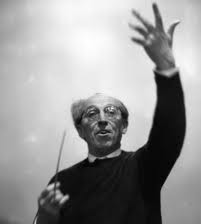
Sommerville requested a minute's silence in memory of the victims of the Boston Marathon explosions (he's also principal horn of the Boston Symphony)  before beginning the next piece on the program. I closed my eyes and allowed myself to experience the moment, surrounded by 1500 very quiet people. He'd commenced conducting the almost inaudible opening measures of the suite from the ballet Appalachian Spring without my knowing it. The effect was magical. It's a long time since I've heard this piece and I'd forgotten, frankly,  how much more there is to it than Simple Gifts. Thank you, Aaron Copland.

Aaron Copland


Michael Torke's Javelin came next. It was commissioned for an album of music celebrating the Atlanta Olympic Games. The composer weaves elements of jazz and popular music into a complex texture. The simultaneities (i.e the harmonies) of the piece at any given point are no more challenging to the listener than those in any piece of later tonal orchestral music (eg. Richard Strauss), but the music is not organized like earlier music. Themes are launched and followed by music which doesn't develop as one expects. I'd listened to a recording of this piece recently and really enjoyed it, but it was nothing to compared to this performance by this really good live orchestra.

Michael Torke

The second half opened with the familiar music of the Gershwin Rhapsody in Blue. Clarinettist Stephen Pierre played the jazzy opening glissando nicely and followed it with a lot more exaggerated articulations. I'd never heard done quite this way, so I checked out the Whiteman 1930 recording and this is the way that clarinet solo was played then, with Gershwin at the piano. Brilliant.

Canadian Pianist Lucille Chung played the piano solo. She's a very fine player, with a fabulous bio. I found her demeanour overly dramatic and animated. It certainly didn't make her play any less well.

The Rhapsody in Blue is a pretty hard act to follow and HPO Composer in Residence Abigail Richardson-Schulte got the call. She first spoke at length about her three movement piece, City Syntesthesia explaining the program of this piece which was inspired by images. I liked the piece a lot, as I did Downstream, her chamber orchestra piece that had been premièred a week before. The demands (and rewards) of writing for full orchestra are different than those of a chamber piece and I did enjoy the lush sound of 40 excellent string players. The piece fit well in this concert.

This composition (and the aforementioned Downstream) are programmatic works which draw on extra-musical sources (eg. stories or pictures). I question the wisdom of discussing the "program" in such detail as Ms. Richardson did before the concert, as well as in the printed notes and in a least two interviews of which I am aware. Speaking as a composer, I would hope the audience would be listening to the music for its own sake, rather than trying to identify the particular cues which the composer has used to structure the piece.

They wrapped up the concert with a spirited performance of Fiesta by Peruvian composer Jimmy López. The work was described in the program as "four pop dances" and there was certainly lots of appropriate rhythm and percussion but this was not just a latter day Symphonic Dances from West Side Story. This piece, like Javelin, belongs within the mainstream of contemporary orchestral writing and employed the technique and sound of New Music.

Jimmy López

What a great concert! I'll be watching for the HPO to announce their 2013-2014 season. If there are more imaginative programs like this one, I'll be there.

For those of you with some time, here areYouTube performances of Javelin and Fiesta.


Wednesday, April 17, 2013

Strata Vocal Ensemble

I went to hear the Strata Vocal Ensemble at MacNeill Baptist Church in Westdale on Sunday, April 14 in the afternoon. They performed, under their conductor Gordon Adnams, a varied program of almost entirely unaccompanied choral pieces. It was an entertaining and musically satisfying afternoon in part because I experienced again, this time from the audience, music which I'd sung as chorister.

My university choral professor, Deral Johnson, would have approved of the choice of music. In the absence of a major work, he taught us to represent different style periods and languages in unified groups within a concert. The music for this concert surely fulfilled those criteria.


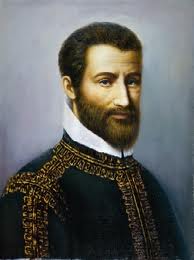
They opened with a three songs selection (out of forty possible ones) from the Canticum Canticorum (Song of Songs) of Giovanni Pierluigi da Palestrina.

A little Palestrina goes a long way. While he is the best known of the composers of this period, Palestrina's music is not usually regarded as the most interesting. Modern audiences are more likely to be engaged by music of Tomás Luis de Victoria or Orlando di Lasso. I once sat through a concert performance Palestrina's entire Missa Papae Marcelli and it was tedious, one movement hardly distinguishable the others. If this is a fault, it was that of the music, not the performers.

Palestrina

In any event, this set was the least successful in the concert. Individual voices were evident. The tenor parts seemed to soar often into the "tight underwear" range. The choir did not achieve the ethereal otherworldliness that the best performances of this music display. It was, however, their warm-up piece and the concert got steadily better.

The Four French Madrigals which followed were much more effective due, in part, to their more homophonic texture. They set offered plenty of contrast and included di Lasso's famous Bonjour, Mon Coeur.

They completed the first half with J.S. Bach's motet Lobet Den Herrn, alle Heiden, the most demanding work on the program. The choir was accompanied by Kirk Starkey, cello and Kate Ward playing a portatif organ. I know the piece well, having performed it as a Tudor Singer under Wayne Riddell. It's one of the standard works in this repertoire, one which every serious chorister aught to have the opportunity to sing. The choir fared well with the support of the accompanying instruments.

After the break, the choir sang four Stanford Latin motets finishing with the rightly popular Beati Quorum Via. The choir seemed at home with these pieces and gave a convincing reading.

They followed with Vancouver composer Stephen Chatman's Elizabethan Summer, lovely madrigal-like settings of three 17th C. texts. Again, the choir sang convincingly.

Stephen Chatman

Next came three chorus from Leonard Bernstein's incidental music to Jean Anouilh's play The Lark. It was wonderful to hear this music, so different from the other works, reminding me of singing this music a long time ago under the aforementioned conductor Deral Johnson.

The choir finished the concert with spirited performances of three spirituals, Goin' Home to God, Deep River and Ride the Chariot. They sang a second arrangement of Deep River as their encore.

I'd encourage choral music devotées to watch for the next outing of this choir. They sing well, the repertoire is interesting and varied, and McNeill is an intimate setting with a satisfying acoustic for choral and chamber music.


Sunday, April 14, 2013

What New Festival at the HPO

I went Saturday, April 13 to hear a chamber orchestra concert at the Studio Theatre of Hamilton Place, conducted by Jamie Sommerville and featuring the very fine first-desk players of the Hamilton Philharmonic Orchestra.

Maestro Jamie Sommerville

Last night's concert was sparsely attended reminding us of why last year's festival was cancelled outright. The audience was loud and appreciative and made up largely, I suspect, of the folks whose financial support sustains the orchestra.

The concert opened with Norbert Palej's Divertimento, which was the most beautiful music of the evening. His idiom is highly accessible and melodic. He combines long note value melodies with impressionistic underpinnings and sometimes regular, and at others times pointillistic, accompanying rhythms, all incorporated in a detailed texture. His affinity to vocal music clearly contributes to his musical style. The strings were featured and violist Elspeth Thomson made a fine effect when it came her turn to play the main theme.

Norbert Palej

They followed with brefs messages (2011) by the celebrated Hungarian composer György Kurtág. His music is of the lineage of Musical Expressionism (like the pre-dodecaphonic Schoenberg) and the concentrated style of Webern. He was also a close friend of György Ligeti. These were the most "difficult" works on the concert but, since they were short and concise, easily digested.

They closed the first half with Jordan Noble's Entropy. He's a prolific Canadian composer with numerous prizes to his name.  I would like to have heard the piece again (they played the première of Abigail Richardson-Shulte's Downstream twice). The piece begins very busily and energetically and the tempo slows, and the density of the texture decreases, as the piece winds down to a very quiet, almost static ending. The piece isn't very long and it was hard for this listener to determine how the musical material was organized on only one hearing.

Jordan Noble

The second half opened with the aforementioned première of Abigail Richardson-Shulte's Downstream. Her idiom is very eclectic and programatic. The motion of the piece was, appropriately, undulating and suggested dance rhythms at times. The middle slow section was very spare and included woodwind players disassembling their instruments in order to produce the sound of bird calls. She's a very imaginative composer.

Abigail Richardson-Shulte

The concert closed with Claude Vivier's Pulau Dewata arranged by McGill professor and composer John Rea. Vivier's music was influenced, even transformed, by his stay in Bali in 1976. In its original form the instrumentation is not dictated. The work provided a nice contrast to the other works on the program. It is sometimes almost minimalistic in its repetition of short musical fragments and features prominent roles for percussionists playing gongs and, especially, pitched percussion instruments like the xylophone.

The festival continues next week concluding on Saturday, April 20 in the Great Hall of Hamilton Place with the full HPO presenting a concert which will include Michael Torke's Javelin and the first performance of Richardson-Shulte's City Synesthesia. 

Monday, April 8, 2013

Bossa Nova, Baby

I remembered having seen a TV concert featuring the music (and piano playing) of Antônio Carlos Brasileiro de Almeida Jobim. You may not know his name, but you've certainly heard his songs.

I searched for a library recording of Jobim's music and chose the one at the top of the list, not realizing that it was famous. It was the first jazz recording to win the Best Album Grammy (1965) and is one of the most successful jazz recordings of all time.


It's called "Getz/Gilberto." There are only 8 songs although the 45 RPM versions of two of the songs are included. Most of the songs are by Jobim alone or written by him with a collaborator. The musicians include Stan Getz, tenor saxophone, Jobim on piano, João Gilberto, guitar and vocals, Sebastião Neto, Bass, Milton Banana, drums, and Astrud Gilberto, vocals.

Much of the music could be mistaken today for Smooth Jazz but when Getz takes a verse and solos we are transported into a different musical world.

I find the best of the songs, The Girl from Ipanema, Desafinado and Corcovado, utterly charming, even spellbinding. Jobim employs a sophisticated harmonic pallette including surprising modulations and, by way of chord substitution, clever and deceiving progressions on the short journey back to the home key. He studied composition with the same teacher as the great Heitor Villa-Lobos who wrote the Bachianas Brazilieras.

Moreover, the simple melodies use sevenths, ninths and thirteenths as often as roots, thirds and fifths. They sound easy to sing until you try it, the melodies constantly sounding dissonances at the top of the chords. Jobim accomplishes this without ever disturbing the overall graceful elegance of the music.

Take, for example, the opening bars of Ipanema. The chord in the lead sheet says F+7 (f-a-c-e) but the first three notes of the tune are g (the ninth), e (the seventh) and d (a lower neighbour tone to the e?). The first note of the bridge is f (the root of the tonic chord, Doh) but it's played over a Gb+7 chord, making it the seventh of the chord and the harmony of the bridge continues in that vein.

Yet it all sounds effortless and inevitable.

Another thing I found interesting is that the rhythm of the English lyrics differ from those established by the original Portuguese lyrics. Put simply, the original lyrics sound better even if, like me, you can't understand a single word.

A little aside. The English lyrics to Corcovado (Quiet Nights and Quiet Stars) were written by Gene Lees. A distinguished music journalist, lyricist and singer with whom I corresponded by e-mail some years ago, he was originally from  Hamilton. He passed away in 2010.

Unbelievably, the woman who inspire The Girl From Ipanema has made a career of it.


I'll leave you with Getz, Gilberto et al and that famous recording of Corcovado. So beautiful.